Building MTB Speed on the Road Perfecting the Dirt to Tarmac Ratio with CUBE Factory Racing
Posted by Andrew Davidson on August 25, 2026

Road peloton or mountain bike starting grid? Both disciplines play their role in off-road success.
The 2026 UCI Mountain Bike World Championships are upon us, with coveted rainbow jerseys being contested across the various off-road events, from August 26 - 30 in Val di Sole, Trentino, Italy. Road cycling superstars like Mathieu van der Poel, Tom Pidcock, and Canada’s own Isabella Holmgren will all be returning to the dirt, dust, and rock gardens; it’s more obvious than ever that the multi-disciplinary approach to pro racing is paying dividends. Holmgren is fresh off an 8th-place finish at the Tour de France Femmes, and Van der Poel just won the final stage of the Tour de France in dramatic, nail-biting fashion. Pidcock, the reigning, two-time Olympic XCO champion, still spends the majority of his time on the tarmac. All are proof that a multi-disciplinary approach pays off, on and off the road.
4iiii will have several teams and athletes competing for world championship glory, including the CUBE Factory Racing riders, who will race for their respective national teams. We thought it was a fitting time to dive into the subject of mountain biking vs road riding, when it comes to how elite racers divide their training up, why they do so, and what benefits each brings to sculpting their world-class form.
Read what professional XC mountain bikers Ondrej Cink, Kira Böhm, Nikolaj Hougs, and Ella Maclean-Howell of CUBE Factory Racing have to say on the subject of training time spent on the trails vs the tarmac, and how their approach may inspire some similar balance in your riding and racing!

Ondrej Cink, a decorated veteran of the pro mountain bike scene, putting all his skills to work.
If you peeked at the training logs of elite cross-country mountain bikers from the CUBE Factory Racing team, you might be surprised by how much time they spend on skinny tires and smooth asphalt.
Kira and Nikolaj both log around 70% to 80% of their weekly training on the road. Meanwhile, teammates Ondrej and Ella maintain a clean 50/50 split between road riding and singletrack. Why do these world-class off-road racers spend so many hours on paved roads? The short answer: building a high-performance engine requires a level of control and precision that mountain bike trails simply can’t provide.
By tracking power data across both road and mountain bikes, these athletes unlock a complete training framework that pairs raw engine building with off-road efficiency. Here is how cross-training with power meters on multiple bikes transforms their performance on the dirt.
Building the Engine vs Driving the Car
Training on technical singletrack is incredible for bike handling, line choice, trail confidence, and flow. However, the technical terrain makes it nearly impossible to maintain a steady, uninterrupted power output.

A perfect demonstration of a skill that can only be practised and perfected on the mountain bike.
“The road is just much better for structured intervals because I can hold a steady power without interruptions,” explains Kira. “On the mountain bike, you develop skills you simply can’t get on the road, like line choice, handling, and producing power while riding technical terrain.”
Ondrej uses the road to dial in specific cadence drills and steady threshold workouts, reserving the mountain bike for explosive bursts and steep off-road climbs.
Similarly, Nikolaj breaks down how specific road intervals translate directly into race-day resilience:
- 4-Minute VO2 Max Efforts: Simulate the demands of hard, punchy climbs.
- 8-Minute Intervals: Build tolerance for hard racing near maximum effort.
- 12-Minute Blocks: Build stamina so you don’t burn out halfway through a race.
The road is where the CUBE Factory Racing crew builds pure engine capacity, the trail is where they learn how to deliver that power through rocks, roots, and corners.

Time spent on the trail equals greater off-road efficiency for Nikolaj Hougs.
Power Spikes vs Technical Efficiency
While road riding lets you sustain smooth, predictable wattage, mountain biking demands a completely different power profile.
Ella notes that while road and MTB fitness carry over to each other, off-road terrain creates constant, unpredictable spikes in power. She uses smooth road surfaces to lock into strict threshold zones, while using MTB rides to build trail speed that conserves momentum.
This introduces a crucial concept in off-road power training: efficiency.
“The more trail you do, the more efficient you’ll get,” says Nikolaj. “You can go further with less power, or faster with less power.”
Instead of relying solely on higher wattage to go faster, cross-training with power teaches you how to carry speed through corners and technical sections so you expend less energy to maintain the same pace.

Combining on and off-road training, a winning recipe!
What the Data Reveals
Tracking power output across both bikes reveals key insights that intuition alone often misses.
- Perceived Effort vs Objective Truth
It’s easy to confuse high fatigue with high performance. Kira points out that power data provides an objective baseline that keeps her honest:
“One thing I learned is that how I feel doesn’t always reflect how I’m actually performing,” Kira shares. “There are days when the efforts feel really hard, but the power numbers are still exactly where they should be. Having that objective feedback helps me trust the process."
- Live Pacing and Training Adjustments
Power metrics also help the athletes make smarter decisions on the fly. Ondrej monitors his live wattage during training sessions to know whether he should keep pushing or call it a day. Nikolaj and his coach use recent power data to adjust race strategies or scale back workout intensity when hidden fatigue sets in.

Power data is a key tool on road and mountain bikes alike for CUBE Factory Racing.
Meanwhile, Ella uses power pacing to execute structured efforts—like staying controlled at the base of a climb before surging over the top when hunting QOMs.
The Amateur’s Blueprint for Dual-Bike Power Training
If you are curious about setting up power meters on both your road and mountain bikes, here are four actionable takeaways from the CUBE Factory Racing pros:
- Look at Normalized Power on Dirt: Ella emphasizes that mountain bike
descending artificially drags down your Average Power due to coasting, even
though technical trails place a heavy physical toll on your body. Focus on
Normalized Power to get an accurate picture of your true effort on MTB rides.
- Test Your Technical Efficiency: Nikolaj recommends timing a local loop on your
home trail while watching your power output. Try to match your fastest lap time
with fewer average watts—this proves you are riding smoother, carrying better
speed, and wasting less energy.
- Keep Structure on the Road, Flow on the Trail: Use road sessions to complete
clean, uninterrupted interval targets. Use your trail rides to practice delivering that
power dynamically over varied terrain.
- Master Your Cadence: Ondrej notes that cadence demands differ significantly between tarmac and trail. Use power data to monitor how your cadence changes on steep off-road climbs so you can maintain smooth power delivery without stalling out.

Mix things up with road and mountain bike training, and you’ll keep a smile on your face too!
The Ultimate Cross-Training Setup
Equipping both your road and mountain bikes with power meters removes the guesswork from your training. By building raw capacity on paved roads and refining technical execution on dirt, you ensure every watt generated translates directly into speed when it matters most.
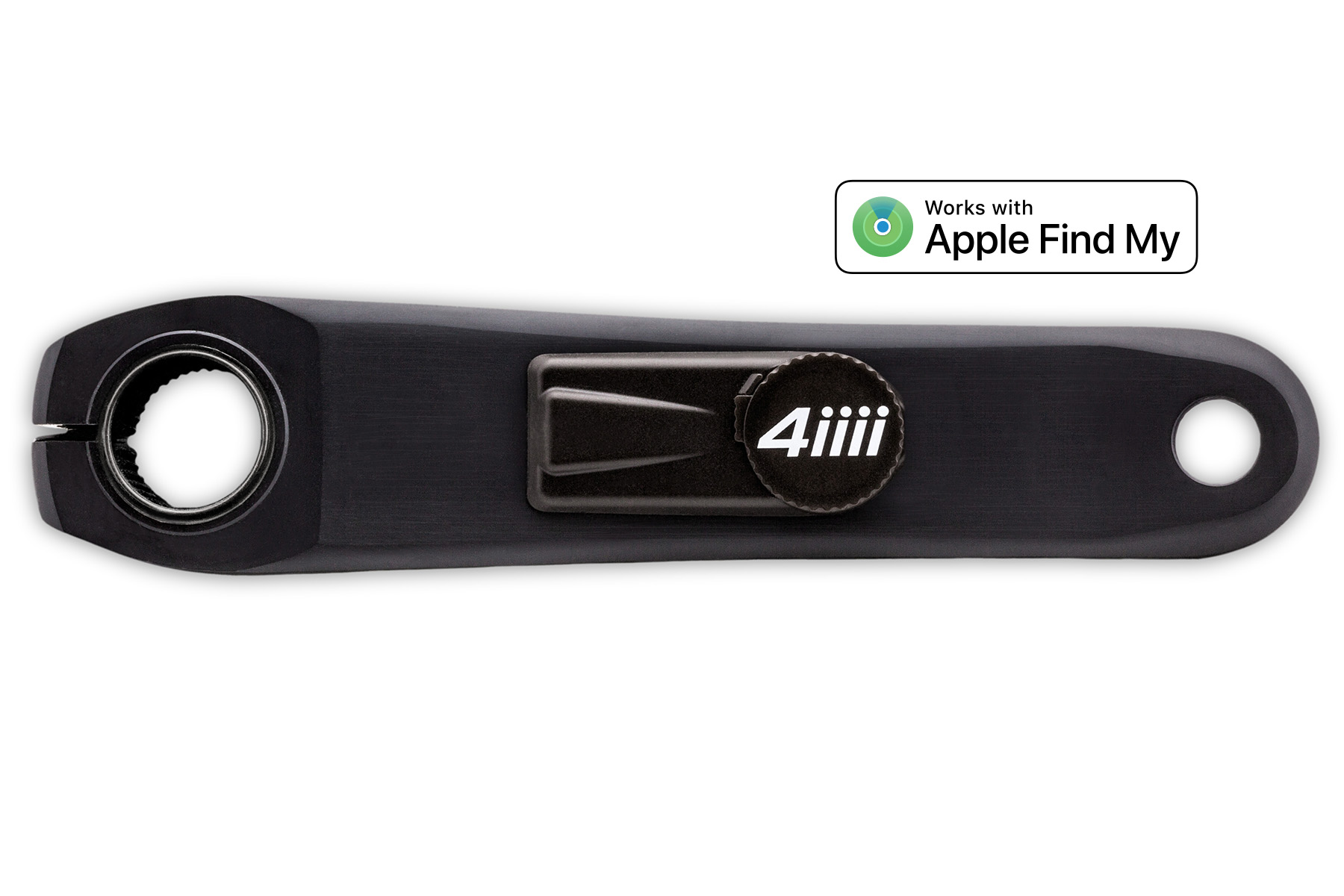
Learn more about the 4iiii power meters used by CUBE Factory Racing athletes, across their mountain and road bikes, here.
Follow CUBE Factory Racing XC and their exploits here.